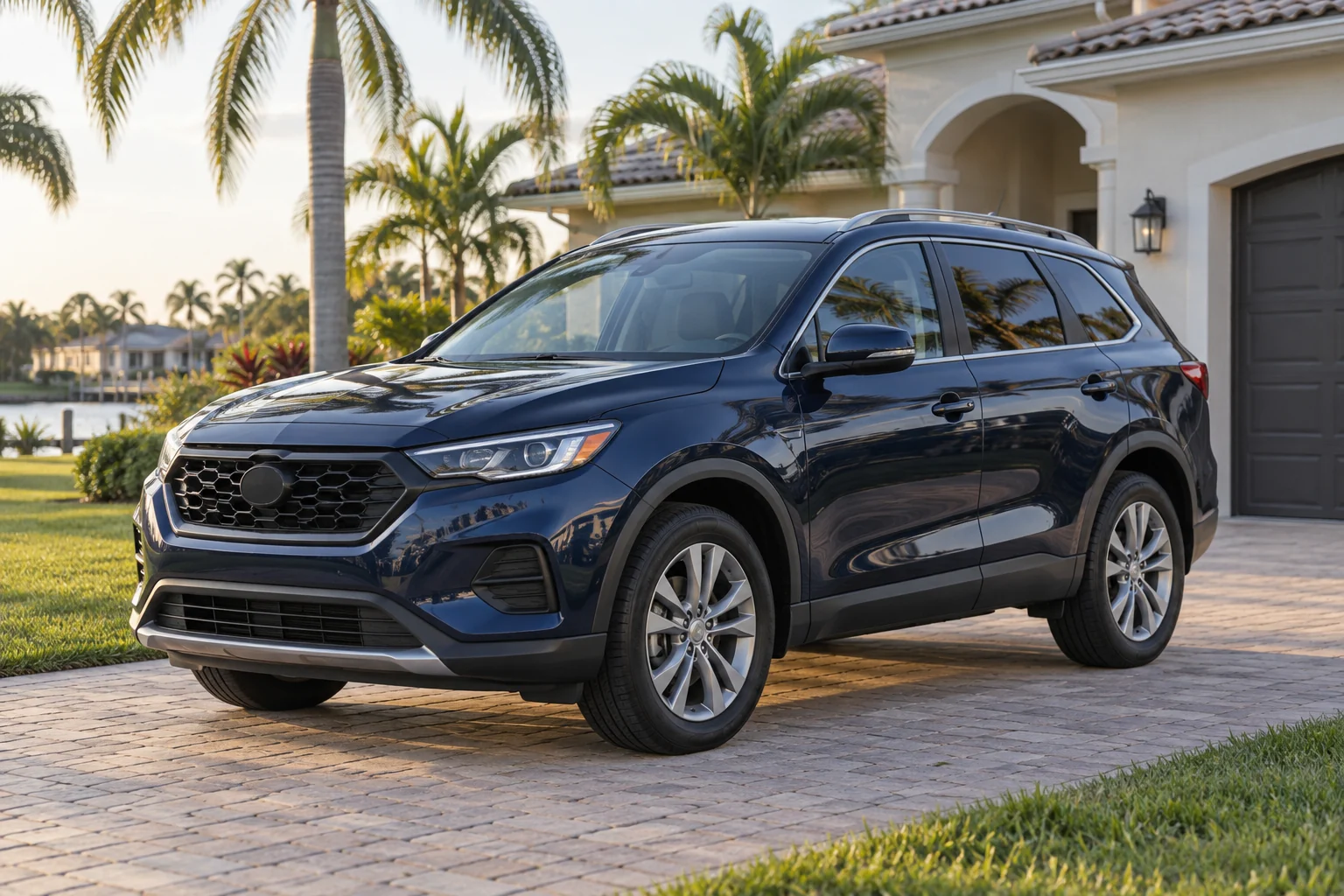

A car, van, or pickup can look personal while creating a business exposure. The questions are who owns it, what it does, who drives it, how far it travels, and what it carries.
The Florida Department of Financial Services Automobile Insurance Toolkit advises consumers that a personal auto policy typically will not cover a vehicle used for business. Some situations may be handled by an endorsement, while others call for a different policy. Each insurer has its own underwriting rules, making complete disclosure the safest starting point.
What is the practical difference?
Personal auto insurance is built around private-passenger use by individuals and households. Commercial auto insurance is designed around vehicles used in an organization’s operations. It can account for a business as the named insured, business drivers, job-site travel, deliveries, trailers, and specialized vehicles.
The label alone does not determine coverage. Review the policy, endorsements, exclusions, listed drivers, and scheduled vehicles. Collision and comprehensive coverage for the vehicle should not be confused with coverage for tools, equipment, inventory, or customer property inside it. Those items may require separate protection.
Before choosing between personal auto insurance in Southwest Florida and commercial auto insurance for Florida businesses, describe the vehicle’s real use rather than the use that produces the cheapest preliminary quote.
Florida business-use scenarios
| Scenario | Why it matters | Sensible starting point |
|---|---|---|
| You drive between home and the same office | Ordinary commuting differs from driving among customers or job sites. Mileage still matters. | A personal policy may fit, but disclose the commute and mileage. |
| You occasionally run a bank or supply errand for work | Policies and carriers treat incidental business use differently. | Ask whether the policy permits it or needs an endorsement. |
| You regularly visit clients, show properties, or make sales calls | Repeated business travel goes beyond a fixed commute. | Compare any business-use endorsement with a commercial policy. |
| You carry tools, ladders, parts, or materials, or tow a work trailer | Vehicle type, load, radius, job sites, and trailer use affect underwriting. Carried property may need separate coverage. | Start with a commercial-auto review and list all equipment and trailers. |
| An LLC or corporation owns or leases the vehicle | The named insured and titled owner must be represented accurately. | Request a commercial quote using the entity’s legal name. |
| An employee uses a personal car for company errands | The personal policy may restrict business use, while the company can face a separate liability exposure. | Confirm the employee’s coverage and review hired and non-owned auto liability for the business. |
| You drive for a rideshare or delivery app | Coverage can change when the app is off, on, waiting, or during a trip. | Disclose the activity and review the platform’s insurance period by period. |
| One pickup serves family and business needs | Mixed use does not automatically fit one policy type. | Provide the use split, mileage, radius, cargo, and driver list. |
Three facts that usually drive the decision
Ownership. Is the vehicle titled to you, a spouse, an LLC, corporation, or partnership? Do not assume a personal policy can name or protect a business correctly.
Use. Explain commuting, client visits, job sites, deliveries, passenger transport, towing, tools, materials, and service calls. Florida’s consumer toolkit notes that changing use from personal to commercial can affect premium.
Drivers. Identify owners, employees, household members, and regular users. Accurate disclosure helps the insurer classify and price the risk.
Florida minimums do not answer the policy-type question
Florida’s general registration rules require at least $10,000 of Personal Injury Protection and $10,000 of Property Damage Liability for covered four-wheel vehicles, maintained throughout the registration period. The Official Florida Driver License Handbook describes these as minimum requirements. They do not establish that business use is covered, pay for damage to your vehicle, or determine a suitable liability limit for a company.
Florida imposes additional combined bodily-injury and property-damage minimums on certain heavy commercial or qualified motor vehicles. Under Florida Statutes § 627.7415, the 2026 thresholds are $50,000 per occurrence from 26,000 to under 35,000 pounds, $100,000 from 35,000 to under 44,000 pounds, and $300,000 at 44,000 pounds or more. Federal financial-responsibility rules can apply when relevant. A smaller work pickup can still need commercial insurance based on use even though these weight thresholds do not apply.
Rideshare is another special case. Florida Statutes § 627.748 requires primary insurance that recognizes transportation-network-company activity. While a driver is logged on without an accepted ride, it sets liability minimums of $50,000 per person, $100,000 per incident, and $25,000 for property damage, plus the specified PIP and UM/UIM treatment. During a prearranged ride, primary liability rises to at least $1 million. The law also permits a personal insurer to exclude coverage while the driver is logged on or completing a ride. Review the platform policy for physical damage, deductibles, and exact coverage periods; a headline limit does not prove every loss is covered.
Commercial-auto quote checklist
- Current declarations pages, renewal terms, and available claim history
- Named insured’s legal name, entity type, and business address
- Title, registration, VIN, year, make, model, body type, and gross vehicle weight
- Garaging location and whether vehicles go home with employees
- Every regular driver, license information, experience, and role
- Annual mileage, daily radius, and interstate travel
- Description of operations and each vehicle’s actual use
- Tools, equipment, inventory, customer property, or hazardous materials carried
- Trailers, attached equipment, and modifications
- Delivery, rideshare, for-hire passenger, or subcontractor use
- Owned, rented, borrowed, and employee-owned vehicles used for work
- Loan, lease, contract, or certificate-of-insurance requirements
- Limits, deductibles, UM/UIM choices, and optional coverages to compare
Ask for quotes using the same drivers, vehicles, limits, and deductibles. A lower premium is not a fair comparison if a needed vehicle, driver, use, or coverage has been removed.
Frequently asked questions
Does commuting to work require commercial auto insurance?
Travel between home and one regular workplace is commonly treated differently from driving to customers, job sites, or delivery locations. Carriers define and rate use differently, so disclose your commute distance, annual mileage, and any workday trips.
Can my personal policy cover occasional business errands?
Possibly. Some insurers accept limited incidental use or offer an endorsement; others do not. Florida’s consumer guidance says the facts and company underwriting rules matter. Obtain an answer based on your policy and actual use.
Does a pickup or van automatically require commercial insurance?
No. Body style alone does not decide the issue. A household pickup differs from one carrying tools to job sites or towing a work trailer. Ownership, payload, radius, frequency, drivers, and operations affect classification.
What if my business owns the vehicle?
Business ownership is a strong reason for a commercial-auto review. The titled owner, registrant, named insured, and any lender or lessor should be represented accurately. Provide the entity’s full legal name and all regular drivers.
What if employees use their own cars for work?
The employee should confirm that the personal policy permits the use. The business should separately ask about hired and non-owned auto liability. That business coverage does not automatically repair the employee’s car or replace the employee’s insurance.
Is commercial auto insurance always more expensive?
There is no universal answer. Price depends on operations, vehicle type and value, garaging, radius, drivers, records, claims, limits, deductibles, and optional coverages. Compare matched quotes and whether each policy accurately addresses the business use.
Review business use before the next trip
If your driving has changed, do not wait for renewal or a claim to mention it. PRK Insurance Inc is a Full Service Insurance Agency serving Naples and Southwest Florida. We can help organize the facts and compare personal or commercial auto options based on the vehicle’s real use.
This article provides general insurance information, not legal advice. Coverage, exclusions, eligibility, and pricing depend on the policy, endorsements, carrier underwriting, and facts of the loss.