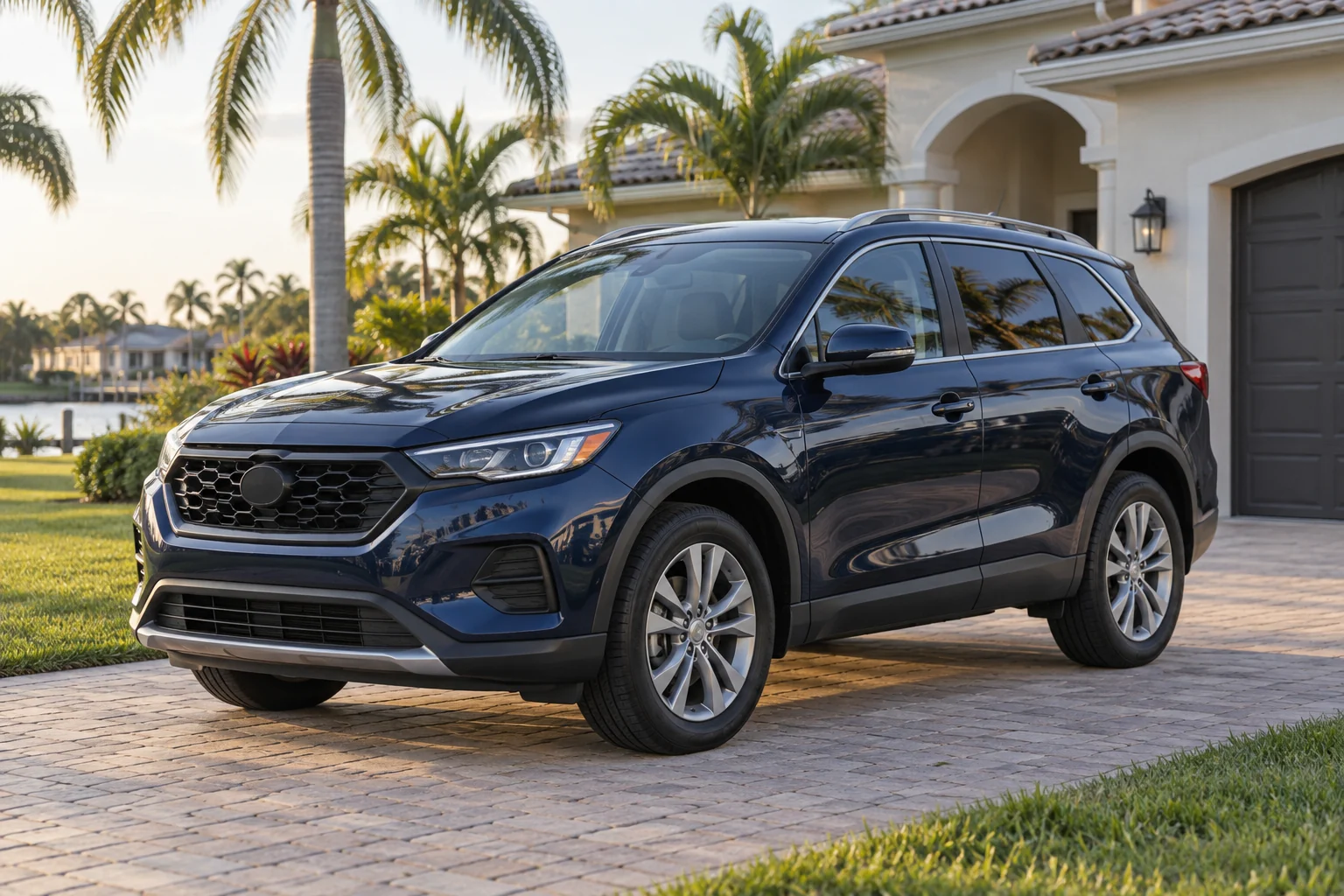

Bundle home and auto insurance Naples households carry when one carrier writes both policies. Bundling can create a multi-policy discount and simplify service, but it is not automatically the lowest-cost or best-coverage option for every Southwest Florida home and driver.
The useful comparison is not “bundle versus no bundle” in isolation. It is the total annual cost and coverage of every policy your household needs. This guide shows how to run that comparison without overlooking hurricane, flood, auto, or liability gaps. To compare actual options, request a home and auto quote from PRK Insurance Florida.
See whether bundling is the right fit for your household
Compare bundled and separate-carrier options across home, auto, flood, and umbrella coverage—not just the advertised discount.
Is bundling home and auto insurance worth it?
It can be. A multi-policy discount may reduce one or both premiums, and using one carrier can make billing, renewals, documents, and claims contacts easier. But the discount is only valuable if the carrier is a good fit for the home and vehicles and the combined coverage remains strong.
- Bundling may work well when: the same carrier is competitive for both risks, the limits match your needs, the discount reduces total cost, and the carrier can accommodate the property and drivers.
- Separate carriers may work better when: a specialist property insurer fits the coastal home, a different auto carrier rates the drivers more favorably, or a bundle requires giving up important coverage.
- A hybrid strategy may be best when: home and auto remain separate but liability limits, effective dates, mortgage information, and umbrella requirements are coordinated through one local agency.
What are the possible benefits of bundling?
Multi-policy discounts
Many carriers offer a discount when qualifying home, condo, renters, landlord, or auto policies are written together. The percentage and policy receiving the discount vary. Ask for the dollar savings on the complete account, not only the advertised percentage.
Simpler service and renewals
One carrier can mean fewer logins, a more consistent billing experience, one agency contact, and renewal dates that may be easier to track. If a loss involves both the home and a vehicle, a single carrier may also reduce handoffs, although each claim still follows its own policy.
Better liability coordination
Placing policies together can make it easier to align home and auto liability limits and satisfy the underlying requirements of an umbrella insurance policy. Every household driver, vehicle, home, rental property, boat, and other exposure still needs to be reported correctly.
Potential retention advantages
Some carriers provide account-level benefits to multi-policy customers. These are carrier-specific and can change, so treat them as a feature to verify rather than a guarantee.
Why a Naples insurance bundle is not always the best answer
Southwest Florida property insurance has underwriting considerations that do not always align with the carrier offering the best auto rate. A home may need a carrier that accepts its roof age, construction, coastal location, occupancy, claims history, or wind-mitigation profile. That insurer may not write auto, or its auto price may not be competitive.
- A lower bundle price may come from lower liability limits or higher deductibles.
- A home discount may be offset by a much higher auto premium, or vice versa.
- A carrier may exclude wind, require a separate wind policy, or offer less favorable roof settlement terms.
- Flood insurance is usually a separate policy and may not receive the same bundle treatment.
- A high-value, classic, or specialty vehicle may fit a different market.
- A seasonal, secondary, vacant, or rental home may need specialized underwriting.
- A teen driver, accident, ticket, or household change can alter the auto side at renewal.
The correct question is: Which combination gives this household the best balance of total cost, coverage, deductibles, carrier fit, and service?
How to compare bundle and separate-carrier quotes
Ask the agency to compare consistent coverage in these scenarios when available:
- Home and auto with Carrier A
- Home and auto with Carrier B
- Home with Carrier A and auto with Carrier B
- Home with Carrier B and auto with Carrier A
Then total every annual premium, policy fee, and required companion policy. Compare the same effective dates and payment assumptions. A monthly number can be misleading when one quote includes fees or a different down payment.
Match the homeowners coverage
- Dwelling and other-structures limits
- Replacement cost versus actual cash value
- Wind or hurricane coverage
- Hurricane and all-other-perils deductibles in dollars
- Roof settlement terms
- Personal property and loss-of-use limits
- Water backup, ordinance or law, screened enclosure, and valuables
- Personal liability and medical payments
See where we can help: Explore PRK’s Southwest Florida insurance service area and local coverage resources.
For a deeper review, use the Naples homeowners insurance guide.
Match the auto coverage
- PIP, property damage, and bodily injury liability limits
- Uninsured/underinsured motorist options
- Comprehensive and collision deductibles
- Rental reimbursement and roadside assistance
- Gap coverage, custom equipment, or new-car features
- Every household driver and vehicle
- Annual mileage, garaging, business use, rideshare, and delivery activity
See the Naples auto insurance guide for coverage definitions and Florida requirements.
Do home and auto bundles include flood insurance?
Usually not in the way consumers use the word “bundle.” Flood insurance is a separate contract from standard homeowners insurance. It may be placed through the NFIP or a private flood carrier, and its eligibility, limits, deductible, and waiting period are evaluated independently.
A Naples household can have home and auto with one carrier and flood with another. The agency should still coordinate addresses, insured names, mortgage information, building details, and effective dates. Read the Southwest Florida hurricane and flood insurance guide before treating a home-and-auto bundle as complete property protection.
How does an umbrella policy fit with a bundle?
A personal umbrella provides additional liability protection above qualifying home and auto policies. It can be especially relevant for households with substantial savings, multiple properties, young drivers, a pool, frequent guests, rental exposure, boats, or other liability risks.
The umbrella carrier usually requires minimum home and auto liability limits. A low-cost bundle that reduces those underlying limits could make the umbrella invalid or create a gap. Confirm that every underlying policy and exposure is scheduled correctly before switching.
Information needed for an accurate bundle comparison
- Current home and auto declaration pages
- Property address, occupancy, year built, roof details, and inspections
- Mortgage company and loan number
- All drivers, licenses, driving history, and vehicle identification numbers
- Annual mileage, garaging, and business or rideshare use
- Flood policy, elevation certificate, and flood-zone information when available
- Umbrella, boat, rental property, motorcycle, golf cart, or recreational vehicle policies
- Requested effective date and payment preference
- Any upcoming changes, such as a teen driver, new roof, renovation, move, or vehicle purchase
Complete information prevents a false comparison based on missing drivers, incorrect roof data, or coverages that would change during underwriting.
When should you re-shop or review a bundle?
- At renewal, especially after a large premium or coverage change
- After replacing a roof or completing documented wind-mitigation improvements
- When adding a teen or other household driver
- After buying, selling, or paying off a vehicle
- When purchasing a home, condo, rental property, or second residence
- After a marriage, divorce, move, retirement, or major asset change
- When an umbrella policy is added or its requirements change
Re-shopping every few months is rarely useful and can create administrative problems. A structured annual review and a review after major changes is a more practical rhythm.
Frequently asked questions
How much can I save by bundling home and auto insurance?
There is no universal percentage. Discounts vary by carrier, policy type, location, home, vehicles, and drivers. Compare the total annual dollar cost of all policies with matched coverage.
Can I bundle condo and auto insurance?
Often, yes. Many carriers treat an HO-6 condo policy as eligible for a multi-policy discount. The condo unit policy must still be coordinated with the association’s master policy and deductibles.
Can an insurance agency bundle policies from different carriers?
A formal carrier bundle normally requires the same company or company group. A Full Service Insurance Agency can still coordinate separate carriers and compare the combined household result, even when no formal bundle discount applies.
Will one home claim increase my auto premium?
Claims and account changes can affect renewal pricing and eligibility in carrier-specific ways. Do not assume a home claim will or will not affect the auto policy. Ask how each carrier handles multi-policy accounts and renewal underwriting.
Should I switch both policies on the same day?
Coordinated effective dates can preserve discounts and avoid gaps, but mortgage billing, escrow, refunds, and underwriting may require careful timing. Do not cancel old policies until new coverage is confirmed in force.
Compare the full household insurance picture
PRK Insurance Florida helps Naples and Southwest Florida households compare bundled and separate-carrier options across home, condo, auto, flood, and umbrella coverage. Request a home and auto quote or contact the Naples team for a coverage review.
This article is general educational information, not a promise of coverage or legal advice. Insurance availability, limits, exclusions, deductibles, discounts, pricing, and eligibility vary by policy, carrier, property, vehicle, driver, and effective date. The policy contract controls.